

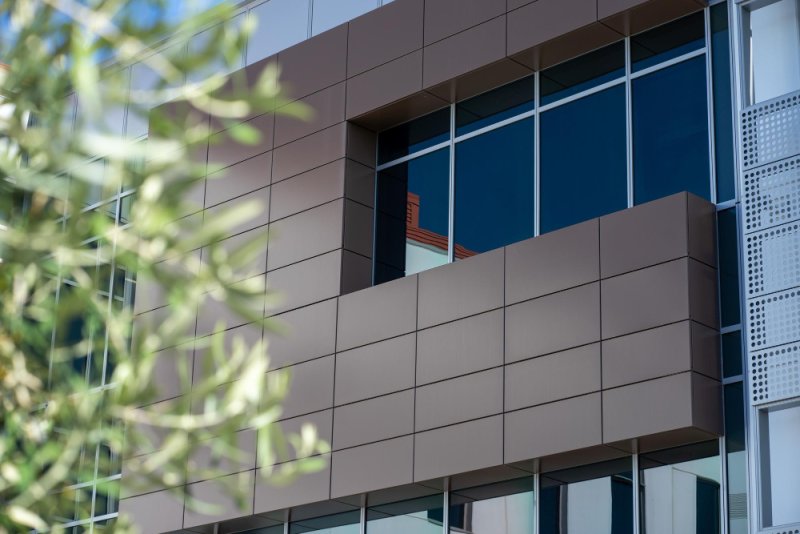
Composite facade cladding systems are among professional solutions that provide aesthetic appearance, durability, and long-lasting exterior performance in modern architecture. They are widely used in commercial buildings, corporate projects, shopfront facades, and hotel applications.
APC Design develops project-specific solutions in composite facade cladding applications by jointly evaluating architectural design, technical planning, and professional installation processes. Facade applications aligned with the building’s architectural character provide significant advantages in both aesthetics and performance.
When selecting a composite facade system, the following criteria should be considered:
Properly planned composite facade applications strengthen the building’s exterior appearance while also providing long-term usage advantages.
Composite facade cladding is a modern exterior system made of special panels consisting of a core filler material between two metal surfaces. Due to its lightweight structure, aesthetic appearance, and application flexibility, it is widely preferred in many architectural projects today.
“Composite facade systems are among the solutions that combine aesthetic appearance and technical performance in modern buildings.”
Composite panels provide design flexibility to architectural projects with various color, surface, and texture options. They especially help create facade designs compatible with brand identity in corporate buildings.
In projects implemented by APC Design, suitable panel systems are selected by evaluating building architecture, intended use, and environmental conditions together.
Composite facade cladding systems offer many technical and aesthetic advantages, making them one of the most preferred exterior solutions in contemporary architecture.
“Professional composite facade applications can improve both the visual value and external resistance of buildings.”
Key advantages include:
| Advantage | Benefit |
| Lightweight structure | Does not add extra load to the building |
| Modern appearance | Provides aesthetic and corporate facade design |
| Color variety | Compatible with architectural design |
| Fast installation | Reduces application time |
| Low maintenance | Provides long-lasting clean appearance |
| Weather resistance | Protects against rain, sun, and wind |
Especially in high-rise buildings, the lightweight panel structure provides a significant advantage in terms of installation ease. In addition, the smooth surface creates a modern and prestigious appearance. Properly applied facade systems can increase building value.
Composite facade cladding systems are used in different building types to create a modern and professional appearance.
Main usage areas:
According to industry data, the use of composite facades in new residential projects has increased by more than 50%, clearly showing the shift toward modern architectural trends.
Composite facade pricing varies depending on panel quality, application area, installation system, and project specifications.
“Cost calculations in facade projects should be based not only on materials but also on technical application processes.”
Key factors affecting pricing:
In custom design projects, detailing and installation difficulty can directly affect costs. APC Design ensures controlled execution through detailed site inspection and technical planning processes.
Technical planning and installation processes are critical for system performance in composite facade applications. Professional applications must be carried out in defined stages.
“Successful facade applications require both engineering planning and field coordination.”
Standard process steps:
APC Design evaluates technical compatibility, aesthetic appearance, and long-term usability criteria together during application processes.
Composite facade systems are widely used modern solutions due to their lightweight structure, aesthetic appearance, and resistance to external conditions. They provide long-lasting use against rain, sun, wind, and environmental effects, while offering various color and surface options for a modern corporate appearance.
“Properly applied composite facade systems provide both aesthetic appearance and long-term performance.”
The lightweight panel structure simplifies installation and reduces additional load on the building. Low maintenance requirements help maintain a clean and modern appearance for a long time. Regular cleaning, connection inspections, and drainage checks are important for system performance.
APC Design develops project-specific professional solutions by evaluating technical durability, architectural harmony, and long-term usability together in composite facade applications.
 Türkçe
  Pусский
  Español
  Français
  العربية
  Job Application
  Phone
Phone  Whatsapp
  Email
Email