

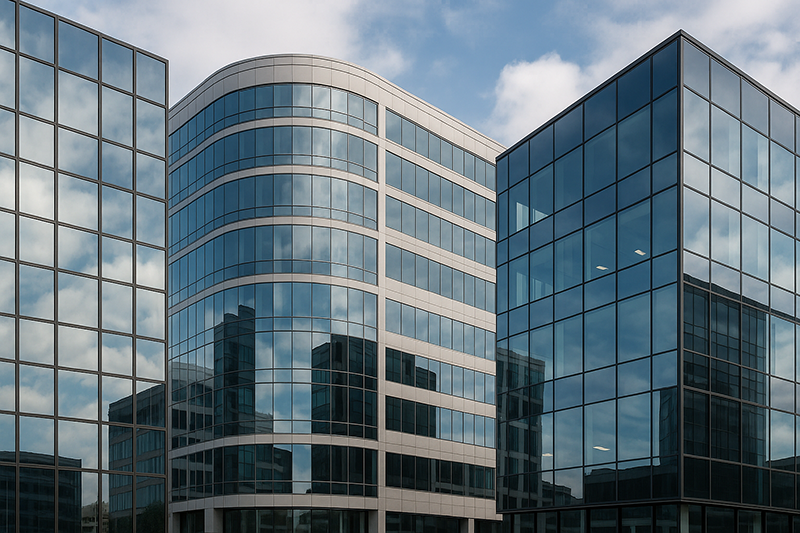
In modern architecture, exterior glass cladding systems offer not only an aesthetic appearance but also numerous advantages such as energy efficiency, durability, and sustainability. Glass cladding gives buildings transparency and a sense of openness while also allowing maximum use of natural daylight.
The use of glass materials strengthens the relationship between buildings and their environment. Additionally, since it aligns with modern architectural design principles, it provides a contemporary appearance in city skylines. For this reason, it is especially preferred in commercial buildings, plazas, and skyscraper projects.
Exterior glass cladding systems are diversified according to different architectural requirements. The advantages of each model vary depending on the area of use and aesthetic preferences. Below you can find the general features and differences of the most commonly used exterior glass cladding systems.
In semi-closed facade cladding systems, horizontal and vertical lines between glass panels are clearly visible. This system provides both an aesthetic line and advantages in terms of installation and maintenance. It also delivers successful insulation performance.
Advantages:
Easy installation
Cost efficiency
Visual integrity
In this system, glass panels are installed without any visible frame or profile from the outside. This creates a single-piece glass surface appearance. These systems, preferred in modern buildings, offer a highly impressive design.
Advantages:
Seamless glass surface
High aesthetic value
Advanced water and air insulation
Structural silicone glass facade systems are created by bonding glass panels to aluminum support systems using special silicone materials. Thanks to the absence of visible gaps or profiles between glass panels, they provide a fully transparent facade appearance.
Advantages:
High sealing performance
Maximum transparency
Flexible aesthetic design options
In this system, aluminum profiles are used along the edges of glass panels, creating visible lines on the facade. It is compatible with both classical and modern architectural styles. Its durability and ease of installation are also key reasons for preference.
Advantages:
Defined architectural lines
Easy maintenance and repair
Compatibility with different architectural styles
As energy efficiency and environmentally friendly buildings become more important today, thermal insulation has become a key feature in exterior glass cladding systems. Systems made with double or triple glazing units with low thermal conductivity help maintain indoor temperature and reduce energy costs.
Advantages:
Energy efficiency
Long-lasting use
Comfortable indoor environments
Curtain wall systems consist of glass panels designed independently from the load-bearing structure and integrated externally to the building. In addition to aesthetic appearance, they also stand out with high insulation and safety features.
Advantages:
High sound and thermal insulation
Elegant exterior appearance
Easy maintenance and cleaning
The quality of materials used in glass facade cladding systems directly affects the success of the application. Glass types should be selected considering insulation properties, durability, and light transmission. The most commonly used glass types are:
Tempered Glass: Resistant to impact and heat.
Laminated Glass: Ideal for safety; does not shatter when broken.
Reflective Glass: Controls heat by reflecting sunlight.
Low-E Glass: Minimizes heat loss.
Before applying an exterior glass cladding system to a building, a detailed survey and engineering analysis must be carried out. This process generally consists of the following steps:
The building structure is analyzed considering wind load, climate conditions, and architectural requirements. This stage is critical for system performance.
After selecting the appropriate system model, detailed technical drawings are prepared to minimize installation errors.
Glass panels and aluminum profiles are manufactured in the factory according to project requirements.
The system is installed by expert teams. Waterproofing, wind resistance, and sealing details are carefully executed.
Exterior glass cladding systems are long-term and high-cost investments. Therefore, working with the right company is essential to achieve both aesthetic and technical success.
If you are looking for high-quality exterior glass cladding solutions for your projects, APC Yapı Paslanmaz Tasarım A.Ş. is a reliable company with strong experience and references in the sector. The company provides professional solutions for all types of construction projects with its expert team and custom design capabilities.
Why APC Yapı?
Customer-oriented approach
High-quality material usage
On-time delivery
Technical consulting and project support
Prices vary depending on glass type, system model, project size, and application details. Therefore, it is more accurate to request a quote after site inspection rather than giving a fixed price. However, exterior glass cladding pays for itself in the long term through energy savings and low maintenance costs.
Aesthetic appearance: Provides a modern and stylish look.
Natural light: Maximizes daylight usage.
Thermal and sound insulation: Reduces energy costs and increases indoor comfort.
Easy maintenance: Simple to clean with low maintenance cost.
Durability: Long-lasting solution against external conditions.
Choosing the appropriate system
Using high-quality glass and profiles
Professional installation
Regular maintenance and cleaning
Performing insulation tests
Exterior glass cladding systems are among the most important architectural elements that combine aesthetics and functionality in modern architecture. They are widely preferred due to their energy efficiency and visual advantages. Working with experienced and reliable companies ensures maximum return on investment.
If you are looking for a reliable partner in glass cladding solutions, you can contact APC Yapı Paslanmaz Tasarım A.Ş. and entrust your projects to professional expertise.
 Türkçe
  Pусский
  Español
  Français
  العربية
  Job Application
  Phone
Phone  Whatsapp
  Email
Email